The heart of Ocala’s history is horses.
Known as the “Horse Capital of the World,” Ocala is home to the World Equestrian Center and some of the nation’s top training centers, and is the breeding place of champion horses. The area’s horse industry has been raising dirt since 1943, and picked up pace when homegrown champion thoroughbred Needles won the Kentucky Derby in 1956.
In an effort to honor Black pioneers in Marion County’s horse and agriculture industry, and to preserve the importance of their impact, Cynthia Wilson-Graham and Tammy Gantt led the charge to host The Heart of the Turf: Racing’s Black Pioneers Exhibit/Meet and Greet event held Sept. 18 at the Marion County Black History Museum At Howard Community Center.
“Nearly 1-in-5 jobs in the county are in this industry,” said Gantt, vice president of the Florida Thoroughbred Breeders and Owners Association. “We spent three years thinking about how we could honor the people who had an impact in the past, present and with inspiring future generations.”
The Heart of the Turf: Racing’s Black Pioneers
The traveling exhibit from the Keenland Library in Kentucky highlights the careers of 100 Black professionals in the horse industry from the mid-1800s to today.
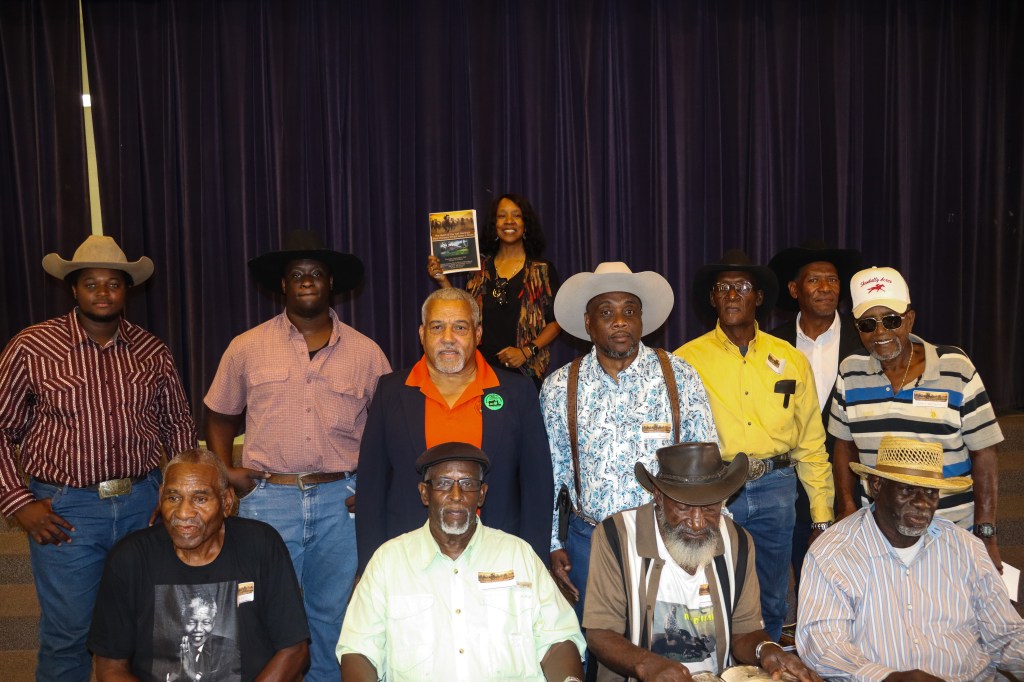
The meet-and-greet kicked off with people exchanging pleasantries and shooting the breeze about old times and missed moments. The room was filled with historic photos, tight embraces and classic cowboy outfits as people packed in to learn more about the trailblazing efforts of people like Melvin James, Lugusta “Gus” Gray, the Rev. Howard Gunn Jr., Raymond Wheeler, David Carson, George Thomas “Charlie Davis” Jr., Rick Wallace, Tayelen Seabrook, Willie Jones Sr., Homer Gary II, Courtney Wilson, Wayne Brown Jr., T.K. Acosta, the Hope brothers, Stephen and Sterling, and Carla Carter-Eldridge.
Gantt helped organize the event by coordinating with the Keenland Library and some of the featured pioneers. She said the event, which drew more than 100 attendees, has been a dream in the making for the past three years.
“It was just incredible,” Gantt said. “I’m so happy to see everyone come together and, with them bringing their personal photos, it just felt like a big family reunion. It felt like a blessing that touched all our souls and I truly feel it’s the best event I’ve been to in a decade.
Wilson-Graham, a museum volunteer and longtime Marion County resident, said the goal of the event was to bring “together people from the Ocala agriculture industry, from those who farmed the land to the ones who worked on the horse, specifically focusing on Black people, because they get little to no recognition.” As attendees trickled into the event, museum staff members were busying filming oral history recordings of the featured guests to capture their memories and experiences. “We hope to collect their history and catalog it because the information is so sporadic,” Wilson-Graham said. “This is critical for history purposes and making sure we know all our history. Individuals who owned the farms made money depending on these guys. These are the men who played a significant part in making Ocala what it is today.”
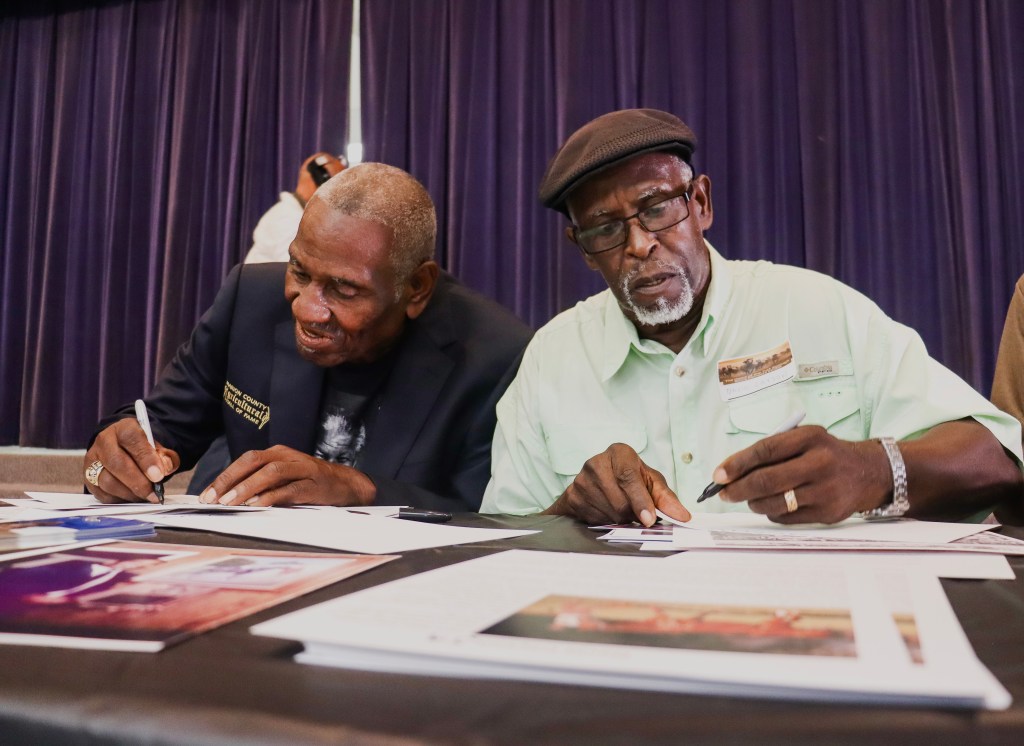
The featured guests are all horsemen who’ve been influential in the local and overall horse industry. They spent the evening speaking one on one with attendees, taking photos and signing autographs.
“Some of these men worked together and this was their first time seeing each other in months or years,” Wilson-Graham said. “We want them to enjoy the moment of fame and having all the attention on them and no one else.”
George Thomas “Charlie Davis” Jr.
He was honored posthumously during the event. Riding horses since the age of 10, the Ocala native was the exercise rider for 1973 Triple Crown-champion Secretariat and cared for 1972 Kentucky Derby-winner Riva Ridge.
Melvin James
Another Florida native, he made history as the first Black farm manager in Marion County when he took on the role at Harbor View Farms in 1965. He also was the first Black person to receive a thoroughbred trainers license in Marion County, allowing him to work with race horses in the county.
James said lessons he learned at the beginning of his 37-year career was to always work hard and never count out a horse too soon. After getting his license, James was tasked to train Affirmed, a colt who was described as being mellow and known for taking long naps then eating at a leisurely pace before taking another nap.
Under James’ guiding hand, Affirmed went on to become the longest-reigning Triple Crown champion as the 11th title holder from 1978 to 2015.
“When we first started, I was making $42.50 a week,” James said. “(I learned) you can’t handle every race horse the same. Some of them you can be rough with and some you can’t.” Lugusta “Gus” Gray
During his 31-year career at Hooper Farm in Ocala, he worked as a hotwalker, groomer and stallion manager. Gray worked with award-winning million-dollar mares including Susan’s Girl, who won multiple Eclipse Awards and is in the National Museum of Racing’s Hall of Fame; Precisionist, a 1985 sprint champion and winner of more than $3.4 million; and Triple Jet, whose offspring won over $23 million.
Carla Carter-Eldridge
The only horsewomen at the meet-and-greet, she made history as one of the founding members of the Thoroughbred Women’s Action League, a group of women agents, trainers, jockeys and others in the horse racing industry.
“(The horses) were my babies; they were my family,” she said. “I would have lived on a race track if my daddy let me.”
T.K. Acosta
An award-winning ranch bronc rider from Lake City, he said he first learned to ride from his granddaddy.
“It feels good (to be here),” Acosta said. “I love it. It (motivates me to) keep going and maybe help someone else get in the seat.”
Dr. Richard Cardinali, a trustee of the Marion County Museum of History and Archaeology and member of the Marion County Historical Commission, hoped the event and the traveling exhibition will inspire people, particularly local youth.
“To me, history is interpreted by two people — those over 28 and those younger,” Cardinali said. “This (exhibit) is really relevant with local history. It’s good for the children to see this and learn their history.”
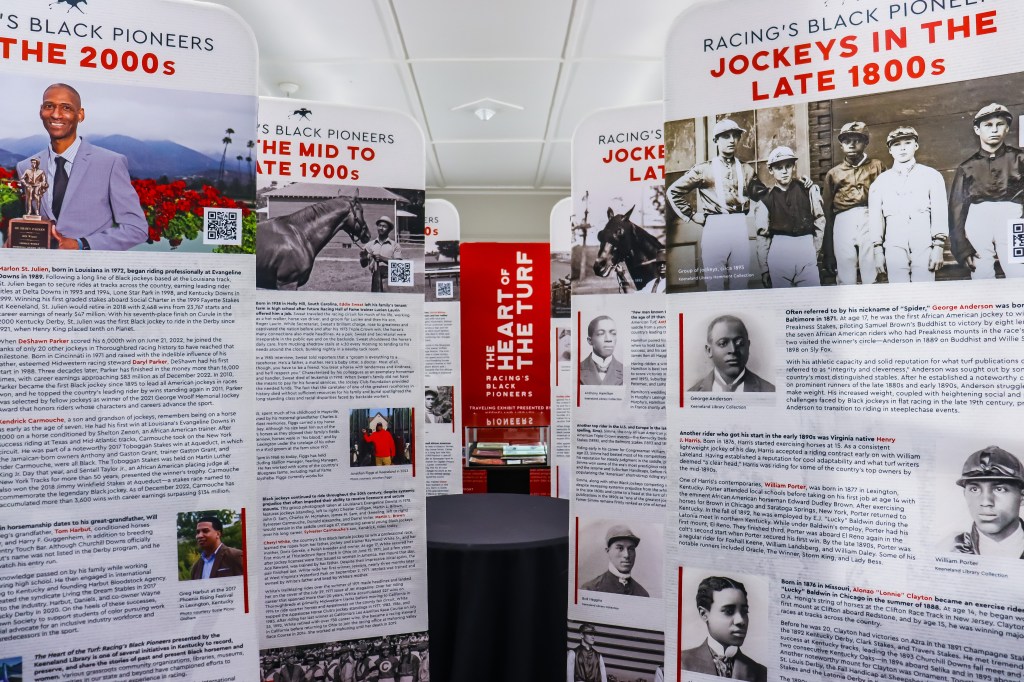
The traveling exhibit was on display at the museum through Monday, before moving to the Florida
Wilson-Graham said she hopes the event is the first of more events that honor the work of Marion County’s Black agriculture workers, and she wants the exhibit to encourage individuals with more information to reach out to the museum.
Thoroughbred Breeders’ & Owners’ Association, 801 SW 60th Ave, Ocala, where it will remain until Oct. 31.
For more information about the Marion County Black History Museum at Howard Academy Community Center, 306 NW 7th Ave., Ocala, call 352-671-4175.
Staff writer Brea Jones can be reached at 352-753-1119, ext. 5414, or brea.jones@thevillagesmedia.com.